Roofing Estimate Checker
Understand how a roof's dimensions, slope, material coverage and allowance for cuts affect an estimated shingle order. Compare quantities using the same units and assumptions.
This tool does not suggest or imply that a contractor is overcharging, making an inaccurate estimate, or acting dishonestly. A contractor's quantities may account for roof features, different measurements, products, installation requirements and accessories that this simplified calculation does not include. It cannot determine whether a quote is fair or correct.
Unfamiliar with roofing squares, pitch, or waste? See the illustrated beginner's guide below ↓
Enter the measurements
Illustrated guide: understand the numbers
What is this checker for?
This tool helps you understand how a simple, rectangular, single-pitch roof might translate into an estimated order of standard asphalt shingles. You can compare that calculated material coverage with a quoted quantity and ask informed questions. The comparison is not an audit, accusation, or assessment of the contractor's pricing.
How to use it
- Find the horizontal length and width of the roof, including overhangs. Use building plans or ask a professional; do not climb onto the roof.
- Find the roof pitch (slope) from plans or a roofing professional. Do not guess if you need an accurate estimate.
- Choose a planning allowance for cuts and fitting. The example 10% is not a universal requirement.
- Enter the actual shingle coverage per bundle from the product label or manufacturer.
- Enter the contractor's quoted quantity of standard field shingles only, in roofing squares or bundles. Do not combine ridge caps, starter strips, or other accessories with this number.
- Read the comparison and discuss any different assumptions with the roofing professional.
How the math works: an example
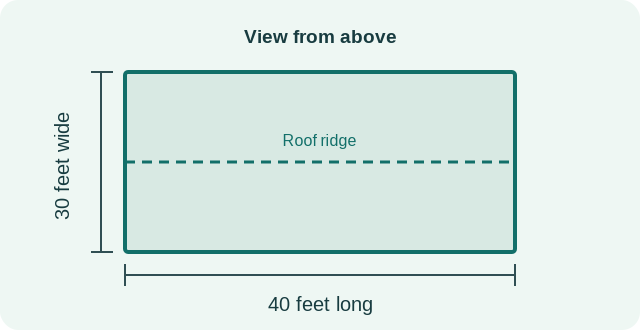
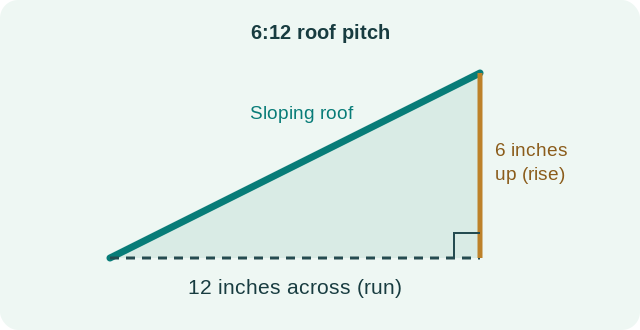
A 40-by-30-foot horizontal roof footprint is 1,200 square feet. With a 6:12 pitch, the slope multiplier is √(1 + (6 ÷ 12)²), or approximately 1.118. The sloped roof area is approximately 1,342 square feet. With a 10% planning allowance, that's approximately 1,476 square feet of material coverage. At 33⅓ square feet per bundle, round up to 45 whole bundles, which cover approximately 1,500 square feet. The calculator compares the coverage of whole bundles, not just the unrounded theoretical area.
What does “waste” mean?
Roofing materials may need trimming at edges, around features, or where roof sections meet. Some offcuts cannot be reused. The planning allowance accounts for this possibility; it is not a contractor fee and does not mean that the same percentage of purchased shingles will necessarily be discarded. Different roof shapes and installation patterns can require different allowances.
Why might the numbers differ?
Common reasons include a roof with several sections or pitches, valleys or dormers, different measurement methods, the coverage of the exact shingle product, bundle rounding, and materials included elsewhere in the quote. A simple rectangular-roof calculation may not represent a complex real roof.
Questions you can ask your contractor — with explanations
These questions are meant to help you understand a proposal and have a constructive conversation. They are not a test of a contractor’s honesty. The sample answers below are illustrations, not promises about how every contractor will prepare a quote.
1. What measured roof area did you use before adding an allowance for cuts?
What does this mean? Measured roof area means the actual surface that needs shingles, including the effect of the roof’s slope. It is different from the flat area you would see looking straight down at the building.
Why ask? It gives you a starting number so you can understand how the estimated material order was calculated.
“We measured about 1,500 square feet of sloped roof surface. Then we added an allowance for cutting and fitting.”
2. Does the measurement include all roof sections, overhangs, dormers, and valleys?
What does this mean? A roof section is one sloping part of a roof. An overhang extends beyond the outside wall. A dormer is a small structure, often with a window, projecting from a roof. A valley is the inward channel where two roof slopes meet.
Why ask? These features can change the total area and the amount of trimming required. A simple rectangular estimate may miss them.
“We included the garage roof and overhangs, and measured the dormer sections separately.”
3. Which shingle product are you quoting, and how much area does one bundle cover?
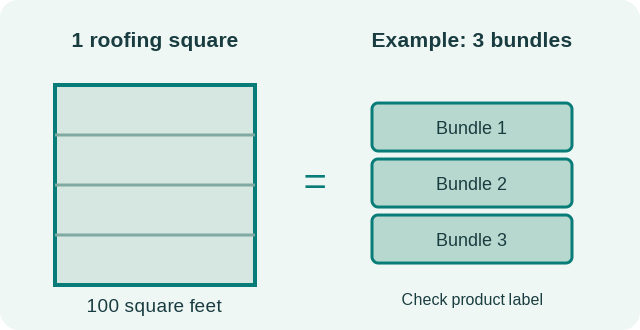
What does this mean? A bundle is a packaged quantity of shingles. Its coverage is the roof area the manufacturer says it can cover when installed as directed. A roofing square is an area of 100 square feet; it is not a physical box of shingles.
Why ask? Not all shingles have the same bundle coverage. Our example uses about 33⅓ square feet per bundle, but the actual product may differ.
“This product covers about 33⅓ square feet per bundle, so three bundles cover approximately one roofing square.”
4. What extra material allowance did you include for cutting and fitting, and why?
What does this mean? Shingles often need to be trimmed at edges and where roof surfaces meet. Some leftover pieces cannot be reused. An allowance is extra material planned for those cuts and other installation needs; it is not an added contractor fee.
Why ask? The amount may change with the roof’s shape, the shingle type, and the installation method. There is no single percentage that fits every roof.
“We used a 10% planning allowance because the roof has a few areas where shingles must be cut.”
5. Are starter strips, ridge caps, underlayment, and flashing included separately?
What does this mean? Starter strips are roofing products used along certain edges. Ridge caps cover roof peaks. Underlayment is a protective layer beneath the shingles. Flashing helps keep water out at joints and around features such as chimneys.
Why ask? These are not necessarily included in the standard field-shingle bundle count. The quote may list them separately or include them in broader items.
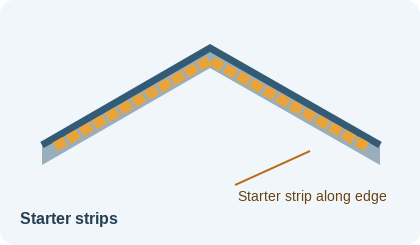
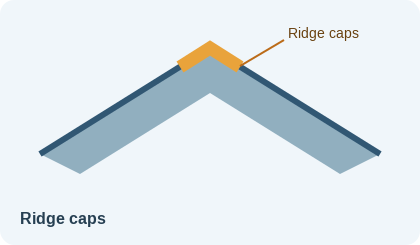
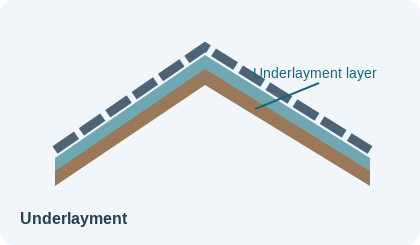
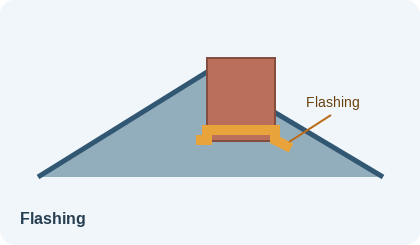
“The field shingles are listed by the square; starter strips, ridge caps, and underlayment appear on separate lines.”
6. Does the quoted quantity mean bundles, roofing squares, or something else?
What does this mean? A square foot measures area. One roofing square equals 100 square feet. A bundle is a package of shingles; its coverage depends on the product.
Why ask? You need matching units to make a useful comparison. Fifteen roofing squares is very different from fifteen bundles.
“We quoted 15 roofing squares of field shingles. For this particular product, that corresponds to about 45 bundles.”
Tip: You can print this guide and bring it to a conversation with a roofing professional. A difference between quantities does not by itself indicate a problem with an estimate.
Important limitations
This is a simplified material-coverage comparison, not a roof inspection, professional takeoff, price comparison, code review, or judgment of any contractor. It assumes one rectangular horizontal footprint with one uniform pitch and does not calculate all roofing materials. Confirm actual requirements with a qualified roofer or supplier before purchasing.
Related roofing tool
Roof Pitch Calculator — understand roof slope with diagrams →