Roof Shingle Calculator
Find out approximately how many bundles of shingles you may need for a simple roof. We explain every measurement, what roofing waste means, and how to discuss the estimate with a contractor. You do not need roofing experience to get started.
Need help with the measurements, roof pitch, or waste allowance? See the illustrated step-by-step guide below ↓
Enter your roof measurements
Before you begin: what are you measuring?
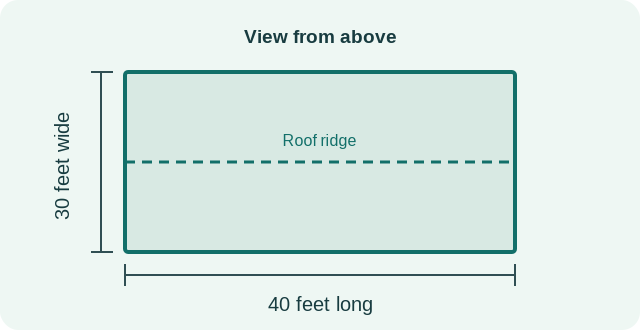
Think of looking straight down at your roof from above. Measure the roof’s overall length and width across the ground, including the edges that extend beyond the walls (called overhangs). You do not need to climb onto the roof to use this calculator.
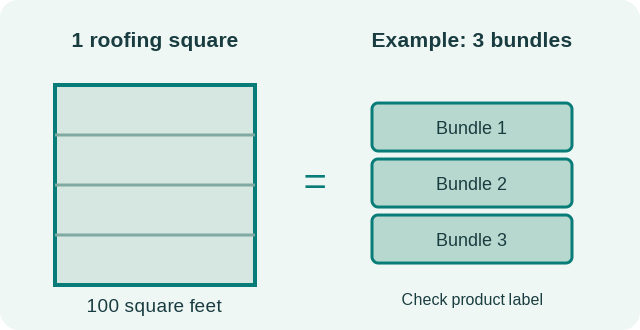
New to roofing? A roofing square is 100 square feet of roof surface. A bundle is a packaged group of shingles. A roof pitch describes how steep the roof is. These terms are explained again below.
What does “waste allowance” mean?
Roof shingles come in pieces that sometimes need to be cut to fit the edges, corners, and features of a roof. Some trimmed pieces cannot be reused. A 10% waste allowance means planning for approximately 10% more shingle coverage than the calculated roof surface. It does not mean your contractor is throwing away 10% of the shingles, and it is not an extra labor charge.
The right amount depends on the roof design, installation pattern, and product. See examples and questions to ask your contractor ↓
How to use the Roof Shingle Calculator
- Enter the roof length and width. Use the dimensions of the roof as seen from directly above, including overhangs. For a simple rectangular roof, enter 40 feet and 30 feet as an example.
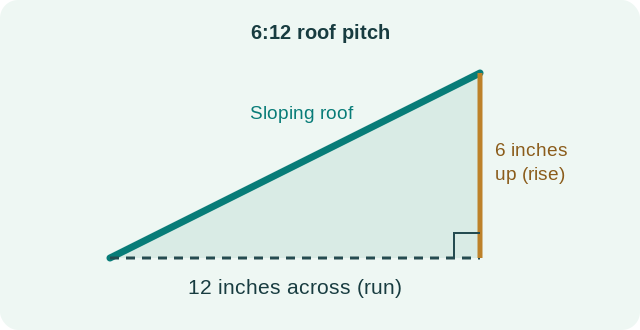
- Enter the roof pitch. A 6:12 pitch means the roof rises 6 inches for each 12 inches of horizontal run. Enter 6 in the pitch field.
- Choose a waste allowance. Waste means extra material for cuts and fitting, not a contractor fee. The 10% example is only a starting point. Learn how to choose an allowance.
- Choose bundles per square. Use the coverage stated on your actual shingle packaging; the default is three bundles per 100 square feet.
- Press Calculate materials. Review the surface area, area including waste, roofing squares, and estimated bundles. Reset returns to the example measurements.
Why use a roof shingle calculator?
If you are budgeting for a roof replacement or comparing material prices, it helps to have an approximate quantity before talking with suppliers or contractors. A rough estimate can help you ask better questions and spot obvious differences between quotes. It is not a substitute for a professional takeoff or installation plan.
How does the math work?
Step 1 — Horizontal area: Length × width. A 40-foot by 30-foot roof footprint covers 1,200 square feet when viewed from above.
Step 2 — Account for the slope: A sloping roof has more surface area than its horizontal footprint. For a roof with one uniform pitch, the slope multiplier is √(1 + (pitch ÷ 12)²). At 6:12, that multiplier is approximately 1.118. So the roof surface is about 1,342 square feet.
Step 3 — Add waste: Multiply by 1.10 for 10% waste. The estimated material coverage becomes about 1,476 square feet.
Step 4 — Convert to bundles: Divide by 100 to get 14.76 roofing squares. At three bundles per square, that is 44.27 bundles, rounded up to 45 whole bundles.
Roofing waste explained: why might a contractor order extra shingles?
When a roofer installs shingles, full pieces do not always fit neatly around roof edges, valleys (where two sloping roof surfaces meet), chimneys, vents, and other features. Shingles may need trimming, and not every offcut can be reused. Roofers may also need special starter strips along the edges and ridge-cap shingles along the roof peak. Those products may be listed separately from regular field shingles.
A simple example
Suppose the actual sloping roof surface is 1,500 square feet. If you add 10% for cuts and fitting, the planning quantity becomes 1,650 square feet. The extra 150 square feet is an allowance for material needs, not proof that 150 square feet will be discarded.
This example shows material coverage before rounding up to complete bundles. Actual bundle coverage varies by product.
How much extra material is normal?
There is no single percentage that fits every roof. A simple rectangular roof with few obstacles may need less extra material than a roof with several valleys, dormers (small structures projecting from the roof), or complicated angles. An allowance of 10% is a convenient example for early planning, not a rule or an industry guarantee. Ask your roofer how the allowance was calculated for your particular roof.
Does a higher waste percentage mean a contractor is cheating me?
No—not by itself. A difference between your calculation and a contractor's quote may come from roof geometry, a different measurement method, the shingle manufacturer's coverage, rounding to full bundles, or additional roofing products. This calculator estimates regular shingle bundles; it does not estimate starter strips, ridge caps, flashing (metal or other waterproofing around roof joints), underlayment (the protective layer beneath shingles), or labor.
Questions to ask before accepting a roofing estimate
Use these questions to understand a quote, not to accuse anyone of wrongdoing.
- What is the measured roof surface area before any waste allowance?
- What waste percentage did you use, and what features of my roof justify it?
- Which shingle product are you quoting, and how much area does each bundle cover?
- Are starter strips, ridge caps, underlayment, and flashing listed separately?
- Is the quoted quantity based on a site visit, plans, or an aerial measurement report?
- What happens to unused, unopened bundles?
How to compare two estimates fairly
Ask both contractors to show the roof area, waste allowance, product coverage, and included accessories. Compare the same materials and scope of work. A lower bundle count is not automatically a better or more accurate estimate.
Common questions
What is a roofing square?
A roofing square is a material-estimating unit equal to 100 square feet of roof surface. It is not a 100-foot-long roof or a square-shaped bundle.
What if my roof has more than one section?
Break the roof into separate simple sections and estimate each one. The current calculator assumes one rectangular footprint with a uniform slope; it does not automatically account for dormers, multiple pitches, unusual shapes, or detailed hip and valley geometry.
What if I do not know my roof pitch?
Check building plans, a previous roofing quote, or ask a roofing professional. Do not climb onto your roof to measure it. Guessing the pitch can change your material estimate.
Why might my supplier recommend a different bundle count?
Shingle coverage varies by manufacturer and product. Starter strips, ridge caps, flashing, underlayment, and other accessories are not included in this bundle estimate. Confirm all quantities before ordering.
Compare quantities with our Roofing Estimate Checker →
Important limitations
This calculator provides an approximate material quantity for a simple roof. It does not evaluate roof condition, structural safety, code requirements, installation methods, or fall protection. For complex roofs or final purchasing quantities, consult a qualified roofing contractor or material supplier.
Related roofing tool
Roof Pitch Calculator — understand roof slope with diagrams →